About 157 minutes
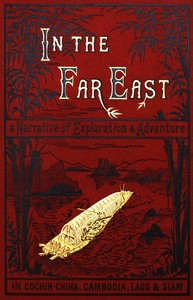
In the Far East A Narrative of Exploration and Adventure in Cochin-China, Cambodia, Laos, and Siam — A Reader’s Guide
Exploration
35,971 recorded words. 7 minutes difference from this book's estimate.
View Gutenberg source #54692
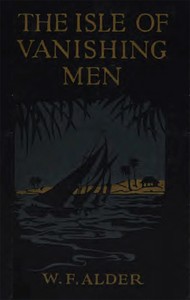
Before opening The Isle of Vanishing Men: A Narrative of Adventure in Cannibal-land — Inside the Classic, the edition data offers a quick orientation: 37,649 words, 2 hr 44 min estimated reading time, and 18 detected text sections.
The text analysis averages about 22.5 words per sentence, while the detected sections provide another way to judge how the source is divided.
Project Gutenberg metadata also associates the work with “New Guinea -- Description and travel,” connecting these edition facts with the source record’s subject description.
Explore this collection
These alternatives are selected using recorded categories and estimated reading time.
About 157 minutes
Exploration
35,971 recorded words. 7 minutes difference from this book's estimate.
View Gutenberg source #54692About 193 minutes
Exploration
44,344 recorded words. 29 minutes difference from this book's estimate.
View Gutenberg source #62138About 331 minutes
Exploration
76,118 recorded words. 167 minutes difference from this book's estimate.
View Gutenberg source #65997Search stored excerpts and compare books → Choose by your preferences →
Choices use stored catalog measurements. Estimates vary with reading speed. A shared category is a catalog label, not a claim that two books have the same argument or literary quality.
Search reads excerpt text stored with this catalog and links to its associated Gutenberg record. The connection is stored in the site database; this tool does not recheck that every excerpt is word-for-word identical to that external record. Excerpt search does not cover every chapter and does not verify historical publication dates.
Catalog snapshot checked: 2026-09-26. Coverage: 100 public books, 100 available source excerpts.
Calculated from edition completeness, EPUB availability, text structure and catalogue metadata. Not a user rating.
Total of 100 points, scaled to a 2.5-5.0 range. Editions with an empty description or a missing EPUB file are not scored.
Public-domain source text
The source text is kept in the dedicated reader, separate from this catalogue record and its commentary.
The narrative opens with the author and his party feeling de trop—unwelcome—as the Kia Kia people make clear through their manner. This early note of awkwardness sets the tone for a travelogue that is as much about failed communication as about exotic encounters. Alder, a photographer and diarist, records what he sees from a distance, often after causing offense with his camera. The book is structured as a series of vignettes: shipwreck, diplomatic overtures, a kangaroo hunt, a head dance. But the most revealing passages are those that dwell on everyday life—how women climb coconut palms “like a giant inch-worm,” how a pig’s misstep in a graveyard leads to its burial in the very grave it despoiled.
Alder’s position as observer is never comfortable. He notes that the Kia Kia “may be friendly at one moment and turn upon one the very next,” a remark that reveals more about his own anxiety than about native volatility. When he tries to photograph funeral rites, resentment forces him to “fill diaries… with notes of happenings observed from a discreet distance.” The camera becomes a source of tension, not documentation. Even the act of giving gifts is fraught: “We made presents of tin jewelry to the natives, but what they wanted was tobacco.” The narrative is punctuated by such small failures of understanding, where the author’s assumptions about what is valuable or appropriate clash with local priorities.
Burial customs receive detailed treatment. The dead are placed in a sitting position, decorated, and lowered into a grave that is not filled with earth but covered with a thatch of palm leaves, earth piled on top. The result is a fragile surface that “must inevitably break through” if walked upon. When a neighbor’s pig wanders into the cemetery and “raises havoc,” the pig is killed and buried in the same grave. Alder reports this with a mixture of horror and bemusement, but the episode underscores how the Kia Kia treat death as a practical, even messy, affair. The body is not removed from the community; it remains a presence that can be disturbed by a heavy animal.
The most vivid passages describe physical labor. Women climb coconut palms by tying grass rope around their ankles, using the binding as a fulcrum to grip the trunk, then “proceed upward like a great inch-worm.” At the top, they twist nuts off with one hand while clinging with the other. The nuts fall “with a thud and a bounce that make one shudder.” Alder notes that the Kia Kia “have no stamina and seem to tire quickly,” a judgment that sits oddly beside the strength required for such climbing. The coconut is the staple, supplemented by sago, fish, pig, kangaroo, and “long pig” (human flesh), listed in order of frequency. This matter-of-fact catalog of diet, ending with cannibalism, is typical of the book’s tone: clinical, curious, and unsettling.
Readers should approach The Isle of Vanishing Men as a document of its time, shaped by the author’s limitations as much as by his observations. Alder is most reliable when describing what he can see and measure—climbing techniques, grave construction, the layout of a kampong. His interpretations of motive or emotion are less trustworthy. The book rewards attention to these concrete details, which survive the dated racial attitudes of the era. The tensions between the narrator and his subjects are part of the story, whether Alder intended them or not.
I finished that New Guinea expedition book, and the way Alder kept circling back to what he couldn't quite understand—those Kia Kia customs he witnessed but never fully decoded—stayed with me. Something similar happened reading In the Far East A Narrative of Exploration and Adventure in Cochin-China, Cambodia, Laos, and Siam — A Reader’s Guide. Both left that quiet ache of distance, the feeling of standing just outside a door you’ll never open.
Save your reaction, strongest insight, and memorable passage.