About 164 minutes
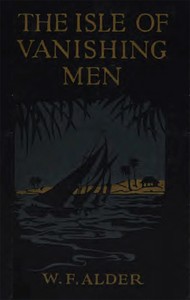
The Isle of Vanishing Men: A Narrative of Adventure in Cannibal-land — Inside the Classic
Exploration
37,649 recorded words. 29 minutes difference from this book's estimate.
View Gutenberg source #57881
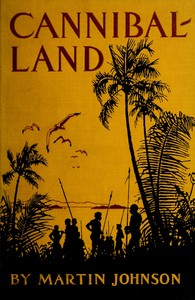
The catalog record for Cannibal-land: Adventures with a camera in the New Hebrides — Themes and Context provides practical reading context through 44,344 words, 3 hr 13 min estimated reading time, and 17 detected text sections.
The text analysis averages about 18.6 words per sentence, while the detected sections provide another way to judge how the source is divided.
Project Gutenberg metadata also associates the work with “Vanuatu -- Description and travel,” connecting these edition facts with the source record’s subject description.
Explore this collection
These alternatives are selected using recorded categories and estimated reading time.
About 164 minutes
Exploration
37,649 recorded words. 29 minutes difference from this book's estimate.
View Gutenberg source #57881About 157 minutes
Exploration
35,971 recorded words. 36 minutes difference from this book's estimate.
View Gutenberg source #54692About 331 minutes
Exploration
76,118 recorded words. 138 minutes difference from this book's estimate.
View Gutenberg source #65997Search stored excerpts and compare books → Choose by your preferences →
Choices use stored catalog measurements. Estimates vary with reading speed. A shared category is a catalog label, not a claim that two books have the same argument or literary quality.
Search reads excerpt text stored with this catalog and links to its associated Gutenberg record. The connection is stored in the site database; this tool does not recheck that every excerpt is word-for-word identical to that external record. Excerpt search does not cover every chapter and does not verify historical publication dates.
Catalog snapshot checked: 2026-09-26. Coverage: 100 public books, 100 available source excerpts.
Calculated from edition completeness, EPUB availability, text structure and catalogue metadata. Not a user rating.
Total of 100 points, scaled to a 2.5-5.0 range. Editions with an empty description or a missing EPUB file are not scored.
Public-domain source text
The source text is kept in the dedicated reader, separate from this catalogue record and its commentary.
Martin Johnson opens Cannibal-land with a dawn sighting of the New Hebrides from the deck of the Snark, a moment that sets the book's pattern of movement between sea and shore. The narrative proceeds through a series of discrete episodes—arrivals, meetings, dances, and departures—each anchored to a specific location such as Vao, Malekula, or Espiritu Santo. Johnson's camera is both a tool and a subject: he describes developing film in tropical heat, sealing negatives for later processing, and the constant threat of mildew or insects. This technical thread runs alongside the human encounters, giving the book a dual focus on the mechanics of early documentary filmmaking and the people he sought to record.
The book is organized as a sequence of titled chapters that read like field reports: “Introducing Nagapate,” “Nagapate comes to call,” “In Nagapate’s Kingdom,” “Good-bye to Nagapate.” This recurring figure—a chief on Malekula—provides a narrative spine. Johnson describes Nagapate’s visits, his demeanor, and the negotiations required to film ceremonies. The chapters move from initial contact to departure, creating a rhythm of approach, observation, and leave-taking that mirrors Johnson’s own journey through the islands. The structure is not chronological in a strict sense but thematic, grouping events around key locations and individuals.
Johnson repeatedly returns to the physical challenges of photography in the New Hebrides. He mentions formalin solutions, gelatin films melting, and the need to dry negatives for forty-eight hours in humid air. One passage describes films covered with “tiny insects or bits of sand or pollen” embedded in the gelatin. Another notes that he developed films in New York nineteen months after exposure, having sealed them in the field. These details recur across chapters, forming a secondary narrative about the fragility of photographic work. The camera itself becomes a character—a device that both enables and complicates his encounters.
The narrative frequently shifts between beach scenes and inland journeys. Johnson describes walking along “the safe beach trail” at Tanemarou Bay, looking seaward, and climbing to the highest peak in northern Malekula to view Nagapate’s kingdom. The coast is a zone of arrival and trade; the interior is where ceremonies and daily life unfold. This spatial contrast is reinforced by illustrations: “A Beach Scene,” “Looking Seaward,” and “Looking over Nagapate’s Kingdom from the Highest Peak.” Johnson’s movement between these zones structures his observations, from the open sea to the enclosed spaces of club-houses and dance grounds.
Johnson’s descriptions of islanders are filtered through his role as a filmmaker. He notes the “Big Numbers” seeing themselves on screen, the “Dance of the Painted Savages,” and the head-curing art on Tomman. Yet he also acknowledges what he cannot capture: the meaning of rituals, the interior lives of his subjects. The excerpts show him focusing on visible actions—dances, fishing, the preparation of food—rather than interpreting belief systems. This restraint gives the book a documentary quality, but also marks the boundaries of his perspective. He records what his camera can see, leaving much unexplained.
Readers should approach Cannibal-land as a record of what one filmmaker saw and did, not as a comprehensive ethnography. Johnson’s attention to the practicalities of his craft—the heat, the insects, the developing process—offers a rare window into early documentary work. The book’s episodic structure and recurring focus on movement between sea and shore, camera and subject, make it a useful primary source for understanding how Western travelers constructed narratives of the Pacific in the 1920s.
That rainy afternoon, the Kodak negatives in Johnson's Cannibal-land felt almost tangible, the humidity of the tropics seeping through the pages. When Nagapate's gaze met the lens, I put the book down, thirsty for the story beneath the photographs. Later, I found myself drifting into The Isle of Vanishing Men: A Narrative of Adventure in Cannibal-land — Inside the Classic, as if the rain had simply washed one chapter into another.
Save your reaction, strongest insight, and memorable passage.