About 542 minutes
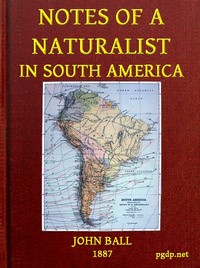
Notes of a naturalist in South America — Inside the Classic
Places Peoples
124,549 recorded words. 110 minutes difference from this book's estimate.
View Gutenberg source #52513
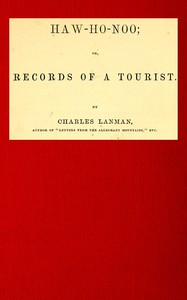
Before opening Haw-Ho-Noo; Or, Records of a Tourist — Key Ideas to Explore, the edition data offers a quick orientation: 99,271 words, 7 hr 12 min estimated reading time, and 11 detected text sections.
The text analysis averages about 28.4 words per sentence, while the detected sections provide another way to judge how the source is divided.
Project Gutenberg metadata also associates the work with “United States -- Description and travel,” connecting these edition facts with the source record’s subject description.
Explore this collection
These alternatives are selected using recorded categories and estimated reading time.
About 542 minutes
Places Peoples
124,549 recorded words. 110 minutes difference from this book's estimate.
View Gutenberg source #52513About 311 minutes
Places Peoples
71,438 recorded words. 121 minutes difference from this book's estimate.
View Gutenberg source #53001About 287 minutes
Places Peoples
66,005 recorded words. 145 minutes difference from this book's estimate.
View Gutenberg source #51341Search stored excerpts and compare books → Choose by your preferences →
Choices use stored catalog measurements. Estimates vary with reading speed. A shared category is a catalog label, not a claim that two books have the same argument or literary quality.
Search reads excerpt text stored with this catalog and links to its associated Gutenberg record. The connection is stored in the site database; this tool does not recheck that every excerpt is word-for-word identical to that external record. Excerpt search does not cover every chapter and does not verify historical publication dates.
Catalog snapshot checked: 2026-09-26. Coverage: 100 public books, 100 available source excerpts.
Calculated from edition completeness, EPUB availability, text structure and catalogue metadata. Not a user rating.
Total of 100 points, scaled to a 2.5-5.0 range. Editions with an empty description or a missing EPUB file are not scored.
Public-domain source text
The source text is kept in the dedicated reader, separate from this catalogue record and its commentary.
Charles Lanman opens Haw-Ho-Noo; or, Records of a Tourist with a maple sugar camp, recalling a taste received from an Indian's hands during his Michigan boyhood. The book's title, borrowed from the Iroquois word for America—the country upheld on the back of a turtle—signals Lanman's interest in Native lore and his native land. The volume is a collection of sketches, not a continuous narrative, moving between wilderness camps, fishing grounds, and frontier settlements. Lanman dedicates the work to poet William Cullen Bryant and addresses critics in his preface, defending his impulse-driven writing. The excerpts show a writer attentive to sensory detail: the sweetness of sugar, the heft of a 49-pound maskinonge, and the sudden violence of a fish speared by torchlight.
The table of contents lists twenty-four sketches, from "The Sugar Camp" to "Indian Legends," with no overarching plot. Lanman groups them under the heading "Records of a Tourist," emphasizing episodic observation over sustained argument. The excerpts reveal a pattern: each sketch typically opens with a setting—a camp, a river, a plantation—then moves into anecdote. The fishing episodes, for instance, begin with technique (salmon fishing, trout fishing) before escalating into struggle. This structure mirrors the tourist's experience: arriving, observing, recounting. Lanman does not attempt a comprehensive geography; instead, he selects moments that illustrate the American landscape's variety and danger.
Lanman repeatedly places the human body in physical contest with nature. In the maskinonge episode, the angler's foot pins the fish's head; the fish flings itself over the gunwale; the man leaps into water to land it. The spear-fishing anecdote ends with the fisherman pulled under by his own weapon. These moments are not merely sporting—they dramatize a precarious balance between mastery and vulnerability. Elsewhere, the sugar camp evokes a gentler touch: the Indian's hand offering sweetness. The body also appears in death: "Death in the Wilderness" and "The Fatal Valentine" suggest that violence shadows these travels. Lanman's wilderness is a place where the body is both tool and target.
Lanman shifts settings abruptly, from a Virginia barbecue to a Canadian recluse's hut, from rattlesnakes to plantation customs. The transitions are rarely explained; the reader follows the tourist's itinerary without a map. This movement creates a mosaic effect: each sketch is self-contained, yet together they imply a continent. The excerpts show Lanman zooming from wide landscape (the country upheld on a turtle) to close detail (a pike inside a maskinonge's stomach). The tourist's gaze is mobile, curious, and unsystematic. He pauses for legend (Indian tales), for technique (fishing methods), for sensation (the taste of sugar). The book's rhythm is that of travel itself: arrival, absorption, departure.
Lanman writes in first person, often addressing the reader directly. In the preface, he thanks critics and defends his impulse-driven method. The excerpts show a narrator who is both participant and observer: he tastes the sugar, hooks the fish, rows the skiff. Yet he also steps back to moralize—the maskinonge "lost his life in grasping at a glittering bauble." This blend of action and reflection gives the sketches a personal, essayistic quality. Lanman's voice is informal, sometimes defensive, but consistently engaged with his material. He does not claim authority as a naturalist or historian; he offers records, not science. The dedication to Bryant aligns him with a literary rather than a scientific tradition.
Readers approaching Haw-Ho-Noo should expect a series of discrete vignettes rather than a unified travelogue. Lanman's strength lies in his eye for concrete detail—the weight of a fish, the feel of a spear—and his willingness to let scenes stand without moralizing. The book rewards those who read it as a collection of moments, each capturing a facet of antebellum American wilderness and frontier life. Pay attention to the transitions: they reveal as much about the tourist's mind as about the landscapes he passes through.
I keep thinking about how Charles Lanman’s Haw-Ho-Noo feels like sitting beside someone who notices the quiet weight of a place — not just the fishing, but the hush around it. There’s a similar patience in Notes of a naturalist in South America — Inside the Classic, where the landscape seems to breathe slowly, asking nothing of you but attention. It lingers that way, gently.
Build a private reading journal entry for this title.
![Cover of Washington, its sights and insights [1909] — Text and Context](https://wuuak.com/storage/media/covers/pg52202.jpg)