About 71 minutes
"Around the Circle": One Thousand Miles Through the Rocky Mountains — Edition Insights
Geography
16,119 recorded words. 13 minutes difference from this book's estimate.
View Gutenberg source #67539
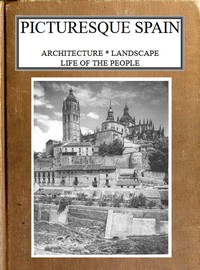
The source record for Picturesque Spain: Architecture, landscape, life of the people. — Context and Discussion measures this digital text at 19,306 words, 1 hr 24 min estimated reading time, and 7 detected text sections.
The text analysis averages about 20.3 words per sentence, while the detected sections provide another way to judge how the source is divided.
Project Gutenberg metadata also associates the work with “Spain -- Description and travel,” connecting these edition facts with the source record’s subject description.
Explore this collection
These alternatives are selected using recorded categories and estimated reading time.
About 71 minutes
Geography
16,119 recorded words. 13 minutes difference from this book's estimate.
View Gutenberg source #67539About 63 minutes
Geography
14,388 recorded words. 21 minutes difference from this book's estimate.
View Gutenberg source #55576About 106 minutes
Geography
24,234 recorded words. 22 minutes difference from this book's estimate.
View Gutenberg source #70214Search stored excerpts and compare books → Choose by your preferences →
Choices use stored catalog measurements. Estimates vary with reading speed. A shared category is a catalog label, not a claim that two books have the same argument or literary quality.
Search reads excerpt text stored with this catalog and links to its associated Gutenberg record. The connection is stored in the site database; this tool does not recheck that every excerpt is word-for-word identical to that external record. Excerpt search does not cover every chapter and does not verify historical publication dates.
Catalog snapshot checked: 2026-09-26. Coverage: 100 public books, 100 available source excerpts.
Calculated from edition completeness, EPUB availability, text structure and catalogue metadata. Not a user rating.
Total of 100 points, scaled to a 2.5-5.0 range. Editions with an empty description or a missing EPUB file are not scored.
Public-domain source text
The source text is kept in the dedicated reader, separate from this catalogue record and its commentary.
Kurt Hielscher's Picturesque Spain opens with a striking claim: Spain is "one great open-air museum." The author, a German photographer, spent five years traveling across the country, covering over 45,000 kilometers with his camera. The book presents a selection of more than 2,000 photographs, organized by region and subject, with the Alhambra in Granada as a recurring anchor. Hielscher describes his camera as a "faithful companion" with a "precious glass eye," emphasizing the visual documentation of architecture, landscapes, and daily life. The work is structured as a series of photographic plates with multilingual captions, moving from the Alhambra's courts and gardens to other cities like Córdoba and Seville, then to broader landscapes and scenes of rural life.
The book devotes its opening section to the Alhambra, presenting multiple views of its courts, towers, and gardens. Hielscher admits he was drawn "again and again to Granada," comparing his compulsion to a pilgrim returning to Rome's Fontana Trevi. The captions list the Myrtle Court, Court of the Lions, Daraxa Court, and Generalife Palace, each photographed from different angles and times of day. This repetition suggests a deliberate attempt to capture the site's shifting moods—morning light on the Sierra Nevada, evening shadows in the cypress court. The structure here is cumulative: each image adds a layer, building a composite portrait rather than a single definitive view.
After Granada, the book shifts to other urban centers—Córdoba, Seville—then moves outward to landscapes, castles, and rural scenes. The list of illustrations groups images by theme: "Courts and Gardens," "Bridges," "Castles," "Views of Landscapes," and "Costumes and Life of the People." This organization mirrors Hielscher's own journey, which he describes as roaming "from the pinnacles of the Pyrenees to the shores of Tarifa." The transition from architectural detail to open landscape is abrupt, reflecting the photographer's method of capturing whatever caught his attention without a strict narrative. The reader moves from a close-up of a lattice window to a panoramic shot of a mountain range, mimicking the experience of travel itself.
Certain visual elements recur across the photographs. Fountains appear in the Alhambra's Court of the Lions and in other patios; bridges span rivers in multiple regions; stone walls and towers dominate the castle images. Hielscher's captions often note the interplay of light and architecture, as in "Alhambra-Puesta del sol" (sunset) and "View from one of the Generalife Gardens on the Albaicin." The emphasis on shadows and reflections suggests a photographer attentive to the changing quality of daylight. These motifs tie the diverse locations together, creating a visual rhythm that reinforces the book's subtitle: architecture, landscape, life of the people.
Hielscher frames his project as a personal quest: "I went at no one's instigation through Spain but that of my own in search of the beautiful." He acknowledges the difficulty of selecting from over 2,000 photographs, noting that many favorites were omitted. This editorial voice appears only in the preface; the rest of the book lets the images speak. The captions are minimal—place names and brief descriptions—leaving interpretation to the viewer. The structure thus balances the author's subjective journey with an objective catalog of sights, a tension that defines the travelogue genre. Readers are invited to trace Hielscher's path while forming their own impressions of Spain's "cultural wealth."
Hielscher's Picturesque Spain is best approached as a visual archive rather than a narrative. The photographs reward slow looking: notice how the same courtyard appears at different hours, how the camera lingers on a fountain or a face. The book's structure—moving from the Alhambra outward—mirrors the author's own fascination, but the reader is free to wander. Let the images guide you, and pay attention to the recurring motifs of water, stone, and shadow. They are the threads that stitch this open-air museum together.
After all these years shelving travelers, I still recall how Hielscher's Picturesque Spain lingered on the Alhambra’s carved shadows, a place where light and stone hold their breath. That same patient hush lives in Florida trails as seen from Jacksonville to Key West and from November to April inclusive — Inside the Classic, where swamps and palms wait quietly under winter sun, two lands sharing one gentle secret.
Save your reaction, strongest insight, and memorable passage.









