About 316 minutes
Gray Days and Gold in England and Scotland — A Reader’s Guide
Geography
72,557 recorded words. 0 minutes difference from this book's estimate.
View Gutenberg source #56429
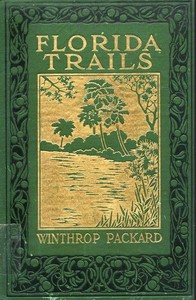
The source record for Florida trails as seen from Jacksonville to Key West and from November to April inclusive — Inside the Classic measures this digital text at 72,636 words, 5 hr 16 min estimated reading time, and 12 detected text sections.
The text analysis averages about 21.5 words per sentence, while the detected sections provide another way to judge how the source is divided.
Project Gutenberg metadata also associates the work with “Florida -- Description and travel,” connecting these edition facts with the source record’s subject description.
Explore this collection
These alternatives are selected using recorded categories and estimated reading time.
About 316 minutes
Geography
72,557 recorded words. 0 minutes difference from this book's estimate.
View Gutenberg source #56429About 320 minutes
Geography
73,404 recorded words. 4 minutes difference from this book's estimate.
View Gutenberg source #55918About 323 minutes
Geography
74,073 recorded words. 7 minutes difference from this book's estimate.
View Gutenberg source #58482Search stored excerpts and compare books → Choose by your preferences →
Choices use stored catalog measurements. Estimates vary with reading speed. A shared category is a catalog label, not a claim that two books have the same argument or literary quality.
Search reads excerpt text stored with this catalog and links to its associated Gutenberg record. The connection is stored in the site database; this tool does not recheck that every excerpt is word-for-word identical to that external record. Excerpt search does not cover every chapter and does not verify historical publication dates.
Catalog snapshot checked: 2026-09-26. Coverage: 100 public books, 100 available source excerpts.
Calculated from edition completeness, EPUB availability, text structure and catalogue metadata. Not a user rating.
Total of 100 points, scaled to a 2.5-5.0 range. Editions with an empty description or a missing EPUB file are not scored.
Public-domain source text
The source text is kept in the dedicated reader, separate from this catalogue record and its commentary.
Winthrop Packard's Florida Trails opens with a journey southward in the company of warblers, immediately establishing a dual focus on migration—both avian and human. The narrative voice moves between the patient eye of a field naturalist and the wry humor of a traveler who admits to sharing Adam's nervousness around snakes. Packard's prose is at once precise and evocative: he notes the polished scales of an indigo snake, the way fire spirals up a pine trunk, and the hollow palmetto logs that shelter raccoons, opossums, and the occasional gopher snake. These observations are grounded in specific places—the Indian River, St. Augustine, a turpentine camp—and in the months from November to April, a timeframe that shapes both the route and the rhythm of the narrative.
Packard writes as both a scientist and a storyteller, and the tension between these roles gives the book its distinctive texture. When describing the gopher snake, he offers a detailed account of its coloration—"intense indigo blue," "burnished metal" underparts, red streaks on the head—then undercuts the clinical tone with a confession: "I am the one that is nervous." This shift from observation to self-deprecation recurs throughout the excerpts. The same voice that notes the precise way fire chars pine heartwood while leaving palmetto trunks only slightly blackened also admits to sharing the rabbit's horror of hollow logs. Packard's language is most vivid when he lets the landscape dictate the pace: a long, patient description of palmettos and their decay patterns gives way to a sudden, comic encounter with a snake. The result is a narrative that moves between stillness and surprise, mirroring the Florida trails themselves.
The excerpts reveal a writer attuned to the tempo of the natural world. Packard lingers on processes: the slow spiral of flame up a pine trunk, the gradual decay of a palmetto log, the way a gopher snake "slips forward with an easy, gliding motion" into a hollow trunk. These moments of extended attention are punctuated by sudden action—a rabbit "hopping out with nervous haste and white tail high in air"—and by the narrator's own startled reactions. The prose itself enacts this rhythm: long, compound sentences describing the landscape give way to short, punchy clauses when an animal appears. Packard also varies pace by shifting between habitats: the open water of the Indian River, the dense scrub of palmettos, the charred ground after a cattleman's fire. Each setting demands a different observational tempo, and Packard adjusts his language accordingly, moving from the expansive to the intimate.
The available excerpts offer only a partial view of Packard's narrative strategies. The table of contents suggests a journey organized by chapter topics—butterflies, birds, fishing, alligators, turpentine camps—but the excerpts do not reveal how these sections connect or whether a continuous travelogue underlies them. The voice in the excerpts is consistently first-person and present-tense, but it is unclear if this holds throughout the book. Packard's tone ranges from lyrical ("The road down Indian River winds always southward toward the sun") to colloquial ("br'er rabbit"), and the excerpts hint at a willingness to blend literary allusion with local folklore. Without the full text, it is impossible to say how the narrative develops across the twelve chapters or whether the pacing shifts as the journey progresses from Jacksonville to Key West. What is clear is that Packard's prose rewards close attention to its own rhythms—the way it speeds up for a chase and slows for a description of decay.
Readers approaching Florida Trails should attend to the interplay between Packard's scientific curiosity and his narrative self-awareness. The book is neither a dry field guide nor a mere travel diary; it is a record of a particular kind of attention, one that moves between the general and the specific, the lyrical and the wry. The excerpts suggest that the most rewarding passages are those where Packard lets the landscape dictate the tempo of his prose, slowing down for a palmetto log and quickening for a startled rabbit. The full text likely rewards reading in the same spirit—patient, alert, and ready for the sudden appearance of a snake.
There’s a moment in Florida Trails where Packard slows to watch a single heron, and I felt the same unhurried pause in another old favorite, Picturesque London — Inside the Classic. Both books wander rather than rush, treating a place as something to sit with quietly. I remember closing each one feeling less like a tourist, more like a patient friend of the landscape.
Save your reaction, strongest insight, and memorable passage.









