About 116 minutes
Peeps at Many Lands: Siam — Key Ideas to Explore
Geography
26,621 recorded words. 10 minutes difference from this book's estimate.
View Gutenberg source #57253
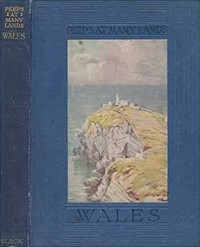
The source record for Peeps at many lands: Wales — Reading Notes measures this digital text at 24,234 words, 1 hr 46 min estimated reading time, and 21 detected text sections.
The text analysis averages about 26.4 words per sentence, while the detected sections provide another way to judge how the source is divided.
Project Gutenberg metadata also associates the work with “Wales -- Description and travel,” connecting these edition facts with the source record’s subject description.
Explore this collection
These alternatives are selected using recorded categories and estimated reading time.
About 116 minutes
Geography
26,621 recorded words. 10 minutes difference from this book's estimate.
View Gutenberg source #57253About 118 minutes
Geography
27,027 recorded words. 12 minutes difference from this book's estimate.
View Gutenberg source #60140About 84 minutes
Geography
19,306 recorded words. 22 minutes difference from this book's estimate.
View Gutenberg source #64959Search stored excerpts and compare books → Choose by your preferences →
Choices use stored catalog measurements. Estimates vary with reading speed. A shared category is a catalog label, not a claim that two books have the same argument or literary quality.
Search reads excerpt text stored with this catalog and links to its associated Gutenberg record. The connection is stored in the site database; this tool does not recheck that every excerpt is word-for-word identical to that external record. Excerpt search does not cover every chapter and does not verify historical publication dates.
Catalog snapshot checked: 2026-09-26. Coverage: 100 public books, 100 available source excerpts.
Calculated from edition completeness, EPUB availability, text structure and catalogue metadata. Not a user rating.
Total of 100 points, scaled to a 2.5-5.0 range. Editions with an empty description or a missing EPUB file are not scored.
Public-domain source text
The source text is kept in the dedicated reader, separate from this catalogue record and its commentary.
Wilmot-Buxton opens her account of Wales with a declaration that the country, despite its modern industries, has 'never lost the magic and glamour of an earlier age.' This tension between contemporary life and enduring legend shapes the book's narrative voice, which moves fluidly between factual travelogue, historical anecdote, and folkloric retelling. The author often adopts a conversational tone, addressing the reader directly as 'we' set off on a journey, yet she also shifts into a more formal register when recounting historical events or quoting verse. The pace varies accordingly: brisk, informative passages about market towns or industrial sites give way to lingering, atmospheric descriptions of sacred rivers or Arthurian landscapes.
The book's opening chapters establish a pattern of direct address and imagined movement. In 'Wild Wales,' the reader is told 'we will take a peep' at various spots, creating a sense of shared exploration. This technique is sustained throughout: 'To-day we will leave North Wales and travel south' begins Chapter X, maintaining a tour-guide immediacy. However, the narrative can shift abruptly from such colloquial framing to dense historical exposition. For instance, after a light description of a market-town, the author may plunge into a detailed account of Roman fortifications or medieval battles, with little transitional phrasing. These shifts in pace are not always smooth; they reflect the author's dual purpose of entertaining the casual reader while imparting scholarly detail. The result is a text that oscillates between the intimate and the encyclopedic, sometimes within a single paragraph.
Wilmot-Buxton frequently interrupts her geographical survey to insert legends, which she treats as integral to understanding the landscape. In the chapter on the River Dee, she devotes several paragraphs to the hero Sir Kay, quoting Spenser's Faerie Queene and describing Kay's supernatural abilities: he could 'make himself as tall as the tallest tree' or 'walk through torrents of rain as dry as on a summer's day.' These passages slow the narrative pace considerably, inviting the reader to linger on the fantastic. The author does not merely append folklore; she uses it to animate the terrain, so that a hill or river becomes a stage for myth. This technique is most pronounced in the introduction, where she asserts that 'romance broods over all' and that the 'spell of the wizard Merlin has touched vale and hill.' The legends are not presented as quaint additions but as essential to the place's identity, and their inclusion creates a rhythm of alternation between factual description and imaginative storytelling.
The prose density—the amount of descriptive detail per sentence—varies markedly across the book. In scenic passages, Wilmot-Buxton employs a more lyrical, adjective-rich style: the Dee is 'silver clean' with 'tumbling billows' that 'roll with gentle roar.' Such moments are often tied to locations with legendary associations. Conversely, when covering industrial or modern topics, her writing becomes more terse and factual. For example, the chapter on a Welsh market-town mentions coal-mining and wool manufacture in brief, almost perfunctory clauses, without the same sensory elaboration. This contrast suggests a deliberate prioritization: the author invests more stylistic energy in places that carry historical or mythical weight. The effect is a landscape that feels unevenly illuminated—some areas are bathed in a romantic glow, while others are sketched in outline. Readers attentive to prose style will notice that the book's emotional temperature rises and falls with its subject matter, making the pace a function of the author's evident enthusiasm for the legendary over the modern.
This editorial note has examined how Wilmot-Buxton's narrative voice and pacing serve to foreground the legendary and historical dimensions of Wales, often at the expense of its contemporary realities. Readers may find it useful to track the author's shifts in register—from intimate guide to detached historian—as a key to understanding her priorities. The book rewards those who read it not as a straightforward travel guide but as a literary performance that uses pace and voice to create a particular vision of Wales, one where the past is always present and the landscape is alive with story.
Wilmot-Bucco's Wales drifts between legend and hillside, and I find myself slowing down where she does. That same unhurried pause lingers in Walks about Washington — Edition Insights, another quiet companion for walking and wondering. There’s something tender about old guidebooks—they keep a place’s earlier self alive, just below the pavement’s surface.
Save your reaction, strongest insight, and memorable passage.









