About 63 minutes
Mogg's Cab Fare Distance Map and London Guide. Index to the Streets, Squares, and Cab Stands. — Background and Themes
Geography
14,388 recorded words. 8 minutes difference from this book's estimate.
View Gutenberg source #55576
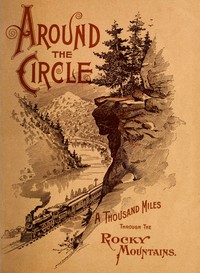
This digital edition of "Around the Circle": One Thousand Miles Through the Rocky Mountains — Edition Insights is described by source-level measurements including 16,119 words, 1 hr 11 min estimated reading time, and 11 detected text sections.
The text analysis averages about 22.3 words per sentence, while the detected sections provide another way to judge how the source is divided.
Project Gutenberg metadata also associates the work with “Colorado -- Guidebooks,” connecting these edition facts with the source record’s subject description.
Explore this collection
These alternatives are selected using recorded categories and estimated reading time.
About 63 minutes
Geography
14,388 recorded words. 8 minutes difference from this book's estimate.
View Gutenberg source #55576About 84 minutes
Geography
19,306 recorded words. 13 minutes difference from this book's estimate.
View Gutenberg source #64959About 51 minutes
Geography
11,663 recorded words. 20 minutes difference from this book's estimate.
View Gutenberg source #68568Search stored excerpts and compare books → Choose by your preferences →
Choices use stored catalog measurements. Estimates vary with reading speed. A shared category is a catalog label, not a claim that two books have the same argument or literary quality.
Search reads excerpt text stored with this catalog and links to its associated Gutenberg record. The connection is stored in the site database; this tool does not recheck that every excerpt is word-for-word identical to that external record. Excerpt search does not cover every chapter and does not verify historical publication dates.
Catalog snapshot checked: 2026-09-26. Coverage: 100 public books, 100 available source excerpts.
Calculated from edition completeness, EPUB availability, text structure and catalogue metadata. Not a user rating.
Total of 100 points, scaled to a 2.5-5.0 range. Editions with an empty description or a missing EPUB file are not scored.
Public-domain source text
The source text is kept in the dedicated reader, separate from this catalogue record and its commentary.
The 1892 guidebook "Around the Circle": One Thousand Miles Through the Rocky Mountains was produced by the Passenger Department of the Denver & Rio Grande Railroad to promote a specific loop tour. It opens with a claim that the journey encompasses more noted and magnificent scenery than any other thousand miles of travel in the known world. The text is structured as a sequence of stops—Marshall Pass, the Black Cañon, Toltec Gorge, Animas Cañon, and the Royal Gorge—each described in superlative terms. The writing blends practical travel information with promotional hyperbole, emphasizing both natural grandeur and the railroad's engineering achievements.
The guidebook relies heavily on superlative language to convey the scale of the scenery. The Royal Gorge is called "the crowning glory" and "the wonder of wonders." The Black Cañon is described as "beautiful, imposing, sublime and awful." Such phrasing is typical of late-19th-century promotional literature, which sought to attract tourists by framing natural features as unparalleled spectacles. The text also uses repetition for emphasis: "seven miles of wonders, seven miles of the grandest, most awful scenery in the world." This rhetorical strategy creates a sense of accumulating marvels, building toward the Royal Gorge as the climax.
Alongside natural wonders, the guidebook highlights the railroad's own feats. At Marshall Pass, it notes that the engineer "control[s] the power of gravitation" to descend a sinuous track. In the Royal Gorge, iron braces and a suspension bridge cling to the cliff face, running parallel to the river. The text presents these structures as attractions in their own right, blending human ingenuity with the landscape. The description of the train navigating "intricate curves" and nearly dashing against cliffs before turning safely emphasizes both danger and mastery. This dual focus—nature's sublimity and the railroad's conquest of it—is a central tension in the work.
The front matter lists numerous railroad agents across the United States, from Chicago to San Francisco to New York, indicating a national marketing effort. The guidebook also promotes three interconnected lines: the Denver & Rio Grande, the Rio Grande Southern, and the Silverton Railroad, each branded with scenic nicknames like "Rainbow Route" and "Scenic Line of the World." This corporate infrastructure underpins the tour, transforming a geographic loop into a commercial product. The inclusion of tables listing altitudes of towns, peaks, and lakes further reinforces the guidebook's dual role as both travelogue and practical reference for the tourist.
Readers should approach "Around the Circle" as a period piece of railroad promotion, not a neutral description. Its value lies in how it reveals the strategies used to package wilderness for tourism—through hyperbole, engineering pride, and careful branding. The guidebook offers a window into late-19th-century attitudes toward nature, technology, and travel in the American West.
This guide’s measured pride in those steel rails hugging granite made me think of a summer I spent tracing old maps in my grandfather’s study. He’d underline passages the way this book charts its passes. A View of Society and Manners in France, Switzerland, and Germany, Vol. 1 (of 2) With Anecdotes Relating to Some Eminent Characters — Themes and Context once gave me that same quiet ache—not for the places themselves, but for the patient hands that recorded them.
Your answers remain private and are stored only in this browser.









