About 531 minutes
In the Strange South Seas — Context and Discussion
Geography
122,027 recorded words. 16 minutes difference from this book's estimate.
View Gutenberg source #54499
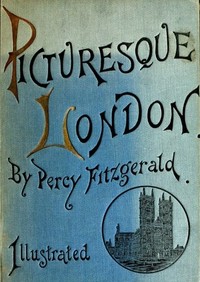
The source record for Picturesque London — Inside the Classic measures this digital text at 125,636 words, 9 hr 7 min estimated reading time, and 16 detected text sections.
The text analysis averages about 22.8 words per sentence, while the detected sections provide another way to judge how the source is divided.
Project Gutenberg metadata also associates the work with “London (England) -- Description and travel,” connecting these edition facts with the source record’s subject description.
Explore this collection
These alternatives are selected using recorded categories and estimated reading time.
About 531 minutes
Geography
122,027 recorded words. 16 minutes difference from this book's estimate.
View Gutenberg source #54499About 522 minutes
Geography
119,978 recorded words. 25 minutes difference from this book's estimate.
View Gutenberg source #54980About 521 minutes
Geography
119,757 recorded words. 26 minutes difference from this book's estimate.
View Gutenberg source #67984Search stored excerpts and compare books → Choose by your preferences →
Choices use stored catalog measurements. Estimates vary with reading speed. A shared category is a catalog label, not a claim that two books have the same argument or literary quality.
Search reads excerpt text stored with this catalog and links to its associated Gutenberg record. The connection is stored in the site database; this tool does not recheck that every excerpt is word-for-word identical to that external record. Excerpt search does not cover every chapter and does not verify historical publication dates.
Catalog snapshot checked: 2026-09-26. Coverage: 100 public books, 100 available source excerpts.
Calculated from edition completeness, EPUB availability, text structure and catalogue metadata. Not a user rating.
Total of 100 points, scaled to a 2.5-5.0 range. Editions with an empty description or a missing EPUB file are not scored.
Public-domain source text
The source text is kept in the dedicated reader, separate from this catalogue record and its commentary.
Percy Fitzgerald's Picturesque London (1890) is not a conventional guidebook. In his preface, Fitzgerald explicitly distances his work from the 'regular official method' of guidebooks, aiming instead to act as a 'living guide' who points out 'special merits and beauties with sympathy.' The excerpts show him doing exactly that: he lingers over architectural details—a 'richly-carved pediment,' a 'heavy solid cupola'—and evokes the atmosphere of places like Wandsworth Manor-house and Cromwell's House, Highgate. His tone is personal and nostalgic, often lamenting the threat of demolition.
Fitzgerald opens his preface by contrasting two modes of sightseeing. The first is the 'regular official method' of the guidebook, where 'the stranger goes round, and stares, and takes care that he sees each object set down in his Book.' This process, he claims, 'leaves a feeling of tediousness.' The second is the 'living guide, the friend that knows the subject,' who can 'describe in a few words why this or that is attractive.' Fitzgerald positions his own work as the latter. He calls his chapters 'Travels in London' and insists they 'do not pretend to be at all in the nature of a guide, or to supply historical or archaeological information.' Instead, they 'simply register impressions.' This explicit rejection of systematic cataloguing is central to understanding the book's structure and voice.
The excerpts focus on two specific houses, both presented as endangered relics. At Wandsworth Manor-house, Fitzgerald marvels that 'the hard and grinding London practical spirit had overlooked this graceful relic.' He describes its 'back façade as architectural as the front,' with a 'richly-carved pediment and scutcheon,' and a garden where 'you could scarcely believe that you were close to the high-road.' He accepts the tradition that Princess Anne lived there, adding 'let us hope that the spoiler will not be allowed to intrude.' At Cromwell's House, Highgate, he notes the 'mellow genial crimson, almost a raspberry tint' of the brickwork, and the 'carved oak statuettes of the Parliamentary soldiers' on the staircase. But he warns that the building is now a children's hospital, and 'a few years may see the Cromwellian house levelled.'
A recurring theme in the excerpts is the fragility of these picturesque survivals. Fitzgerald repeatedly frames his descriptions as records of something soon to disappear. At Wandsworth, he hopes the 'spoiler will not be allowed to intrude.' At Highgate, he notes that the hospital's need to expand may lead to demolition: 'the choice piece of ground, the gardens behind, and the fine healthy, stimulating air are tempting enough.' He generalizes: 'the best are going or gone. Not by the slow processes of the leveller and builder, but thr...' (the text cuts off). This sense of urgency gives the book a preservationist undertone, even as Fitzgerald insists he is not writing a guide. His role is that of a sympathetic observer, capturing what might soon be lost.
Readers should approach Picturesque London as a series of personal essays rather than a reference work. Fitzgerald's strength lies in his eye for detail and his ability to evoke a sense of place. The book rewards those who read it slowly, following his digressions and savoring his descriptions of brickwork, carvings, and gardens. The catalog subject 'Description and travel' is accurate, but the excerpts show that Fitzgerald's real interest is in the picturesque as an aesthetic quality, not in systematic topography.
There’s something tender in how Percy Fitzgerald worried over old London’s disappearing corners, as if each brick held a whisper. I caught myself thinking of that same gentle ache while wandering the fells, where stone walls lean into the wind, lovely and unguarded. That quiet reverence lingers in Yorkshire Dales and Fells — Reading Companion, a familiar sort of longing for places that ask nothing but to be seen.
Build a private reading journal entry for this title.









