About 483 minutes
An Englishwoman in the Philippines — Themes and Context
Geography
111,000 recorded words. 15 minutes difference from this book's estimate.
View Gutenberg source #58863
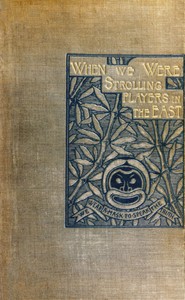
Before opening When We Were Strolling Players in the East — Context and Discussion, the edition data offers a quick orientation: 107,489 words, 7 hr 48 min estimated reading time, and 14 detected text sections.
The text analysis averages about 16.4 words per sentence, while the detected sections provide another way to judge how the source is divided.
Project Gutenberg metadata also associates the work with “Orient -- Description and travel,” connecting these edition facts with the source record’s subject description.
Explore this collection
These alternatives are selected using recorded categories and estimated reading time.
About 483 minutes
Geography
111,000 recorded words. 15 minutes difference from this book's estimate.
View Gutenberg source #58863About 489 minutes
Geography
112,367 recorded words. 21 minutes difference from this book's estimate.
View Gutenberg source #55190About 447 minutes
Geography
102,774 recorded words. 21 minutes difference from this book's estimate.
View Gutenberg source #56321Search stored excerpts and compare books → Choose by your preferences →
Choices use stored catalog measurements. Estimates vary with reading speed. A shared category is a catalog label, not a claim that two books have the same argument or literary quality.
Search reads excerpt text stored with this catalog and links to its associated Gutenberg record. The connection is stored in the site database; this tool does not recheck that every excerpt is word-for-word identical to that external record. Excerpt search does not cover every chapter and does not verify historical publication dates.
Catalog snapshot checked: 2026-09-26. Coverage: 100 public books, 100 available source excerpts.
Calculated from edition completeness, EPUB availability, text structure and catalogue metadata. Not a user rating.
Total of 100 points, scaled to a 2.5-5.0 range. Editions with an empty description or a missing EPUB file are not scored.
Public-domain source text
The source text is kept in the dedicated reader, separate from this catalogue record and its commentary.
Louise Jordan Miln's When We Were Strolling Players in the East opens with a distinctive narrative voice that is at once self-deprecating and sharply observant. The author, an actress traveling through Asia with a theatrical troupe, frames her account as a series of personal encounters rather than a systematic travelogue. From the first chapter, she establishes a conversational tone, addressing the reader directly and punctuating her descriptions with wry asides. The book's structure—a collection of titled vignettes rather than chronological chapters—mirrors the episodic nature of her journey. Miln's prose moves between brisk, reportorial passages and more leisurely, reflective moments, a rhythm that reflects the pace of travel itself: sudden bursts of activity followed by long stretches of waiting or observation.
Miln's narrative voice is not uniform; it adapts to her subject. In chapters like “My First ’Rickshaw Ride,” her tone is lively and immediate, capturing the novelty of the experience with short, punchy sentences. Elsewhere, as in “Chinese Shoes,” she adopts a more essayistic register, stepping back to generalize about cultural differences. This shift is often signaled by a change in sentence length and rhythm. For instance, her description of Chinese women's bound feet moves from factual explanation (“They bend four of the human toes back”) to a broader meditation on Western versus Eastern attitudes toward exercise and leisure. The effect is that the reader is never quite sure what mode the next paragraph will take—a quality that keeps the prose engaging but also reflects the author's own fluctuating engagement with her surroundings.
A notable structural feature is the repetition of thematic headings across different locations. Miln includes multiple chapters titled “Oriental Obsequies” and “Oriental Nuptials,” each treating the customs of a different culture—Hindoo, Burmese, Chinese, Japanese, and Parsi. This cyclical organization allows her to compare practices directly, though she rarely makes explicit cross-references. Instead, the reader observes similarities and differences through the accumulation of detail. For example, the description of a Hindoo burning ghât emphasizes ritual precision, while the account of Chinese coffins focuses on material culture. The repetition of these headings also creates a sense of rhythm, as if the traveler is continually encountering the same human events refracted through different cultural lenses. Miln's voice remains consistent in its curiosity, but the pacing varies: the funeral chapters tend toward solemn, measured prose, while the wedding chapters often include lighter, more anecdotal touches.
Miln frequently breaks the narrative flow by addressing the reader directly, a technique that alters the pace of the text. Phrases like “Truth compels me to mention” or “I do not believe that they are ever cuffed” insert a personal, almost conversational pause. These interjections can slow the reading, inviting reflection, or they can accelerate it by creating a sense of intimacy. In the chapter “Chinese Shoes,” she writes, “We regard exercise as a blessed privilege. The Chinese regard exercise as a dire necessity.” The parallel structure and the shift from “we” to “they” create a rhythmic contrast that underscores her argument. Such moments are scattered throughout the book, serving as rhetorical devices that control the tempo. They also reveal Miln's awareness of her audience: she assumes a Western reader unfamiliar with Asian customs and uses direct address to bridge that gap, sometimes with humor, sometimes with earnest explanation.
Readers approaching this work should attend to the way Miln's voice modulates between the personal and the ethnographic. The book rewards those who notice the recurring thematic cycles and the subtle shifts in prose rhythm. Because the excerpts are incomplete, it is unclear how the later chapters develop these patterns, but the early sections establish a clear authorial strategy: to present travel not as a linear narrative but as a series of impressions, each with its own tone and tempo. This is a memoir best read in short sittings, allowing each vignette to stand on its own.
I finished that travelling actress’s memoir, and one moment stayed with me—her quiet awe at strangers’ kindness. It made me think of your love for wanderers’ tales, so I set it beside this older one, A vagabond in the Caucasus — Text and Context. Both feel like letters from a friend who’s far away, and somehow that distance makes their voice feel closer.
A brief reflection can help important ideas stay with you longer.









