About 666 minutes
The Land Beyond the Forest: Facts, Figures, and Fancies from Transylvania — Story, Setting & Ideas
Geography
153,054 recorded words. 3 minutes difference from this book's estimate.
View Gutenberg source #57168
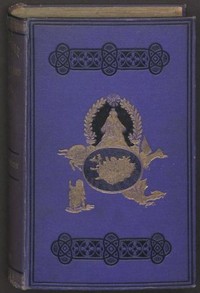
The catalog record for Ultima Thule; or, A Summer in Iceland. vol. 2/2 — Key Ideas to Explore provides practical reading context through 152,360 words, 11 hr 3 min estimated reading time, and 21 detected text sections.
The text analysis averages about 23.5 words per sentence, while the detected sections provide another way to judge how the source is divided.
Project Gutenberg metadata also associates the work with “Iceland -- Description and travel,” connecting these edition facts with the source record’s subject description.
Explore this collection
These alternatives are selected using recorded categories and estimated reading time.
About 666 minutes
Geography
153,054 recorded words. 3 minutes difference from this book's estimate.
View Gutenberg source #57168About 649 minutes
Geography
149,090 recorded words. 14 minutes difference from this book's estimate.
View Gutenberg source #59584About 688 minutes
Geography
158,233 recorded words. 25 minutes difference from this book's estimate.
View Gutenberg source #57942Search stored excerpts and compare books → Choose by your preferences →
Choices use stored catalog measurements. Estimates vary with reading speed. A shared category is a catalog label, not a claim that two books have the same argument or literary quality.
Search reads excerpt text stored with this catalog and links to its associated Gutenberg record. The connection is stored in the site database; this tool does not recheck that every excerpt is word-for-word identical to that external record. Excerpt search does not cover every chapter and does not verify historical publication dates.
Catalog snapshot checked: 2026-09-26. Coverage: 100 public books, 100 available source excerpts.
Calculated from edition completeness, EPUB availability, text structure and catalogue metadata. Not a user rating.
Total of 100 points, scaled to a 2.5-5.0 range. Editions with an empty description or a missing EPUB file are not scored.
Public-domain source text
The source text is kept in the dedicated reader, separate from this catalogue record and its commentary.
Burton opens Volume II with a survey of Reykjavik's press and Latin school, then moves quickly into practical travel matters: guides, horses, and gear. The catalog subjects—Iceland, sulfur, and geography—are all present, but the excerpts show that sulfur occupies only one chapter and an appendix, while the bulk of the narrative follows a journey eastward to Mý-vatn and the Vatnajökull glacier. Burton's voice is that of a seasoned traveler who weighs advice from locals against his own experience, as when he disagrees with Mr. Watts about the best route to the glacier.
The chapter on tours and guides reveals Burton's interest in the practicalities of Icelandic travel. He catalogs horse gear, traps, and tents, and later describes the three dwarf landing-piers at Djúpivogr, noting one with a double tramway that contrasts with the local anchor made of cask staves and basalt blocks. These details show a traveler attentive to the gap between imported technology and indigenous solutions. Burton also records advice from Icelandic informants: Hr Guðmundsson recommended approaching the Vatnajökull from the Blængr cone, while Mr. Watts urged avoiding the Berufjörð line—advice Burton rejected. The narrative thus becomes a record of competing local and foreign knowledge, with Burton positioning himself as the arbiter.
Burton's account of the Vatnajökull glacier is built from secondhand reports and his own plans. He summarizes earlier attempts: Danish officers who lost ponies in the early 1800s, Professor Gunnlaugsson's 1838 journey along the Vatnajökullsvegr, and Mr. Watts's 1871 effort. Watts described the glacier as a volcano-glacial region with vast lava streams and possible fertile valleys, but Burton quotes him with skeptical parentheses, marking claims like "active craters (?)" and "unparalleled elsewhere (?)" as uncertain. Burton then outlines two practicable routes of his own, emphasizing the advantages of saving a week's travel and establishing depots. The tone is practical, not heroic; the glacier is a logistical problem, not a sublime spectacle.
The catalog lists sulfur as a subject, and the appendix indeed compiles writings by Henchel, Mackenzie, Crowe, Burton himself, and Blake on Icelandic sulfur, plus notes on sulfur in Sicily, Transylvania, and the Andaman Islands. But in the main text, sulfur appears primarily in the chapter on the Krísuvík mines, where Burton describes the Solfatara and sulfur springs. The illustrations include "The Sulphur Spring" and "Solfatara of Krísuvík." The appendix's comparative scope—from Sicily to the Andamans—suggests Burton viewed sulfur as a global commodity, not just a local curiosity. Yet the excerpts give no indication that the book argues for sulfur's economic importance; rather, the subject is embedded in a travel narrative that treats geology as one topic among many.
Readers should approach this volume as a travelogue that frequently digresses into natural history, anthropology, and practical advice. Burton's willingness to quote and critique other travelers makes the text a layered source, but the excerpts are too fragmentary to reveal the book's overall argument, if any. The catalog subjects are a starting point, not a summary; the actual content ranges more widely, and the appendix on sulfur is only one of many components.
I keep thinking about how Burton walked those Icelandic fields, noticing sulfur and stone, and how a place can hold you long after you leave. That same lingering feeling followed me through Canada, the Spellbinder — Text and Context, like a quiet thread tying one landscape’s memory to another’s. It isn’t loud about it. Just stays, softly, in your thoughts.
Save your reaction, strongest insight, and memorable passage.









