About 362 minutes
A Gringo in Mañana-Land — Reading Companion
Geography
83,155 recorded words. 0 minutes difference from this book's estimate.
View Gutenberg source #67200
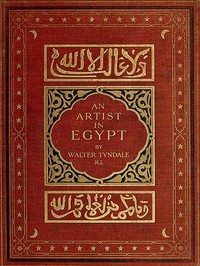
Before opening An Artist in Egypt — Reading Companion, the edition data offers a quick orientation: 83,126 words, 6 hr 2 min estimated reading time, and 29 detected text sections.
The text analysis averages about 25.3 words per sentence, while the detected sections provide another way to judge how the source is divided.
Project Gutenberg metadata also associates the work with “Egypt -- Description and travel,” connecting these edition facts with the source record’s subject description.
Explore this collection
These alternatives are selected using recorded categories and estimated reading time.
About 362 minutes
Geography
83,155 recorded words. 0 minutes difference from this book's estimate.
View Gutenberg source #67200About 365 minutes
Geography
83,756 recorded words. 3 minutes difference from this book's estimate.
View Gutenberg source #56534About 356 minutes
Geography
81,877 recorded words. 6 minutes difference from this book's estimate.
View Gutenberg source #62632Search stored excerpts and compare books → Choose by your preferences →
Choices use stored catalog measurements. Estimates vary with reading speed. A shared category is a catalog label, not a claim that two books have the same argument or literary quality.
Search reads excerpt text stored with this catalog and links to its associated Gutenberg record. The connection is stored in the site database; this tool does not recheck that every excerpt is word-for-word identical to that external record. Excerpt search does not cover every chapter and does not verify historical publication dates.
Catalog snapshot checked: 2026-09-26. Coverage: 100 public books, 100 available source excerpts.
Calculated from edition completeness, EPUB availability, text structure and catalogue metadata. Not a user rating.
Total of 100 points, scaled to a 2.5-5.0 range. Editions with an empty description or a missing EPUB file are not scored.
Public-domain source text
The source text is kept in the dedicated reader, separate from this catalogue record and its commentary.
Walter Tyndale opens An Artist in Egypt by distinguishing his second book from his first: where the earlier work captured first impressions, this one claims the benefit of a longer stay in the Nile Valley. The preface frames the book as both a record of accumulated drawings and a deepened insight into the character of the Egyptian people. Yet the excerpts that follow quickly exceed the scope of a travel sketch. The most extended passage—a chapter-length narrative related by a servant named Rames—recounts a violent succession struggle involving the Viceroy Abbas, a blood-stained bath, and a midnight ride to the Citadel. This story, complete with oaths, beards cut off in mockery, and a self-inflicted pistol shot, reads more like a historical thriller than a painter's notebook.
The catalog subjects—Egypt — Description and travel and Egypt — Pictorial works—suggest a book of scenic impressions and illustrations. Tyndale does indeed remark on the vanishing picturesque bits of medieval Cairo and the unchanged aspect of villages since the Saracen invasion. But the excerpts devote far more space to a single, elaborate anecdote than to any description of a monument or landscape. The story of Abbas's death and Said's coup is told in the voice of Rames, a servant, with dialogue, suspense, and graphic detail: the body lifted out of the bath, the threat of flayed tongues. This narrative mode—first-person, dramatic, novelistic—dominates the sample. The painterly eye is present in the preface but nearly absent from the excerpted chapters. Readers expecting a series of visual sketches will instead find a book that alternates between travelogue and embedded historical fiction.
Tyndale does not present the coup story as his own observation. He attributes it to Rames, a servant who claims to have been an eyewitness. The narrative is framed as a tale told to the author, complete with the storyteller's oath and the repeated phrase "By Allah, the compassionate, the merciful." This framing raises questions about the book's genre: is it a travel memoir, a collection of oral histories, or a hybrid? The preface thanks Mr. Weigall, the Chief Inspector of Upper Egypt, for opportunities to dwell at Thebes and for a desert journey to the Red Sea, but the excerpts do not describe that journey. Instead, they plunge into a palace intrigue that the author could not have witnessed. The reader must infer that Tyndale is acting as a recorder of local stories, not just a painter of scenes. The catalog subjects do not capture this narrative dimension.
The table of contents shows a book organized into chapters with descriptive titles: "Cairo Revisited," "The Mosque of Muristân Kalaûn," "The Festival of the ‘Hasaneyn’." These promise a conventional travelogue. Yet the excerpted chapter, which appears to be Chapter VII, is titled "In Which I Get Another Servant and Hunt for a Crocodile; Also a Continuation of the Story of Princess Zohra." The actual content, however, is the coup narrative, not a crocodile hunt. This mismatch suggests that Tyndale's chapter headings are whimsical or that the excerpts are incomplete. The story of Princess Zohra, mentioned in earlier chapter titles, does not appear in the sample. The structure seems to interleave travel episodes with extended tales, but the excerpts provide only one such tale. Readers should expect a book that jumps between modes, with the painterly observations perhaps concentrated in chapters not included here.
The excerpts from An Artist in Egypt reveal a work that defies its catalog classification. While the subjects promise description and pictures, the sample delivers a gripping historical narrative told in a servant's voice. Readers interested in Egyptian travel writing will find the book's genre unstable: part memoir, part collected oral history. The painter's perspective is promised but not demonstrated in the available text. Approach the book as a hybrid work, and note that the full range of Tyndale's observations—architectural, ethnographic, scenic—may lie in the chapters not excerpted here.
That rainy afternoon, Tyndale’s account of the palace coup left me less with Egypt’s light than with its layered histories—how place holds memory like silt. I found myself drifting toward the flat, fenland quiet of The Cambridge, Ely, and King's Lynn Road: The Great Fenland Highway — Themes and Context, where roads seem to whisper older reckonings. Both books, I realized, are less about travel than about time pressing through weather and stone.
Your answers remain private and are stored only in this browser.









