
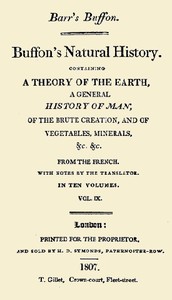
Buffon's Natural History. Volume 09 (of 10) by Buffon
Let's be clear from the start: this isn't a novel. There's no plot in the traditional sense. Buffon's Natural History, Volume 9 is part of a giant, 10-volume attempt to describe the entire animal kingdom. This specific book focuses on what Buffon called 'Pachyderms' – basically, thick-skinned animals. Think elephants, rhinoceroses, hippopotamuses, and their relatives.
The Story
There's no character arc, but there is a fascinating journey. The 'story' is the journey of human knowledge itself. Buffon, sitting in France, is trying to make sense of creatures reported from Africa, Asia, and the Americas. He pieces together descriptions from explorers, judges the reliability of sources, and often gets things hilariously (or tragically) wrong. He argues about whether the African and Asian elephants are different species, speculates on the temperament of the hippo, and tries to reconcile wildly different reports of the rhino's famous horn. The narrative tension comes from watching a sharp, Enlightenment-era mind grapple with a flood of new, unverified information about the natural world.
Why You Should Read It
This book is a time capsule. Reading it, you don't just learn about animals; you learn how people in the 1700s thought about animals. You see the birth of modern zoology, complete with its stumbles and biases. Buffon's voice is surprisingly engaging—he's confident, sometimes arrogant, and fiercely opinionated. It's humbling and thrilling to see which of his guesses were spot-on and which were completely off base. It reminds you that science isn't a list of facts, but a messy, argumentative process. You're getting a front-row seat to that process at a pivotal moment in history.
Final Verdict
This is a niche read, but a rewarding one. It's perfect for history or science lovers who enjoy seeing how ideas evolve. If you liked books like 'The Invention of Nature' or are fascinated by the Age of Exploration, you'll find Buffon's work captivating. It's also great for anyone who appreciates primary sources—getting knowledge straight from the 18th-century source, unfiltered. It's not a light beach read, but for the curious mind, it's a unique window into a world being discovered one strange, thick-skinned creature at a time.
This text is dedicated to the public domain. Knowledge should be free and accessible.
Jessica Jackson
4 months agoI was skeptical at first, but the depth of research presented here is truly commendable. I would gladly recommend this title.


Charles Gonzalez
8 months agoIt effectively synthesizes complex ideas into a coherent whole.