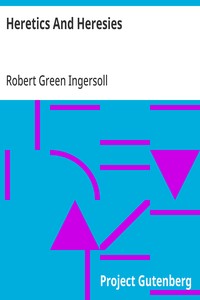
Heretics And Heresies by Robert Green Ingersoll
Let's be clear from the start: this isn't a novel with a plot. There's no hero's journey in the traditional sense. Instead, think of 'Heretics and Heresies' as a guided tour through the history of rebellion, led by the most charismatic tour guide you can imagine. Robert Ingersoll was known as 'The Great Agnostic,' and in this book, he collects his thoughts on the people throughout history who were branded as heretics.
The Story
The 'story' is the argument itself. Ingersoll walks us through figures like Galileo, Bruno, and Thomas Paine—people whose ideas about science, God, or government got them in serious trouble. He lays out what they actually believed, why the authorities of their time were so threatened, and the brutal consequences they faced. He doesn't just recount history; he prosecutes a case. The villains in his story are intolerance, dogma, and the misuse of power to crush new thought. The heroes are reason, free speech, and intellectual courage.
Why You Should Read It
I picked this up out of historical curiosity, but I finished it feeling personally energized. Ingersoll's writing is direct, witty, and surprisingly modern. He has this way of cutting through centuries of tradition to ask the simple, obvious question no one was allowed to ask. Reading him defend a heretic from the 1600s feels relevant to debates happening today about censorship, conformity, and 'cancel culture.' It's a powerful reminder that the right to think for yourself was hard-won. You don't have to agree with every point he makes (I didn't), but the force of his commitment to intellectual freedom is contagious. It makes you sit up a little straighter.
Final Verdict
This book is perfect for anyone who loves history, philosophy, or a good, passionate argument. If you enjoy the works of Christopher Hitchens or Carl Sagan, you'll hear their intellectual ancestors in Ingersoll's voice. It's also great for skeptics, free-thinkers, or anyone who's ever felt like an outsider for questioning the status quo. A word of caution: if you prefer your history neutral and detached, Ingersoll's fiery opinions might be too much. But if you want to read history that feels alive, urgent, and deeply human, this is a brilliant and bracing experience. Keep an open mind and prepare to be challenged.
Legal analysis indicates this work is in the public domain. You do not need permission to reproduce this work.